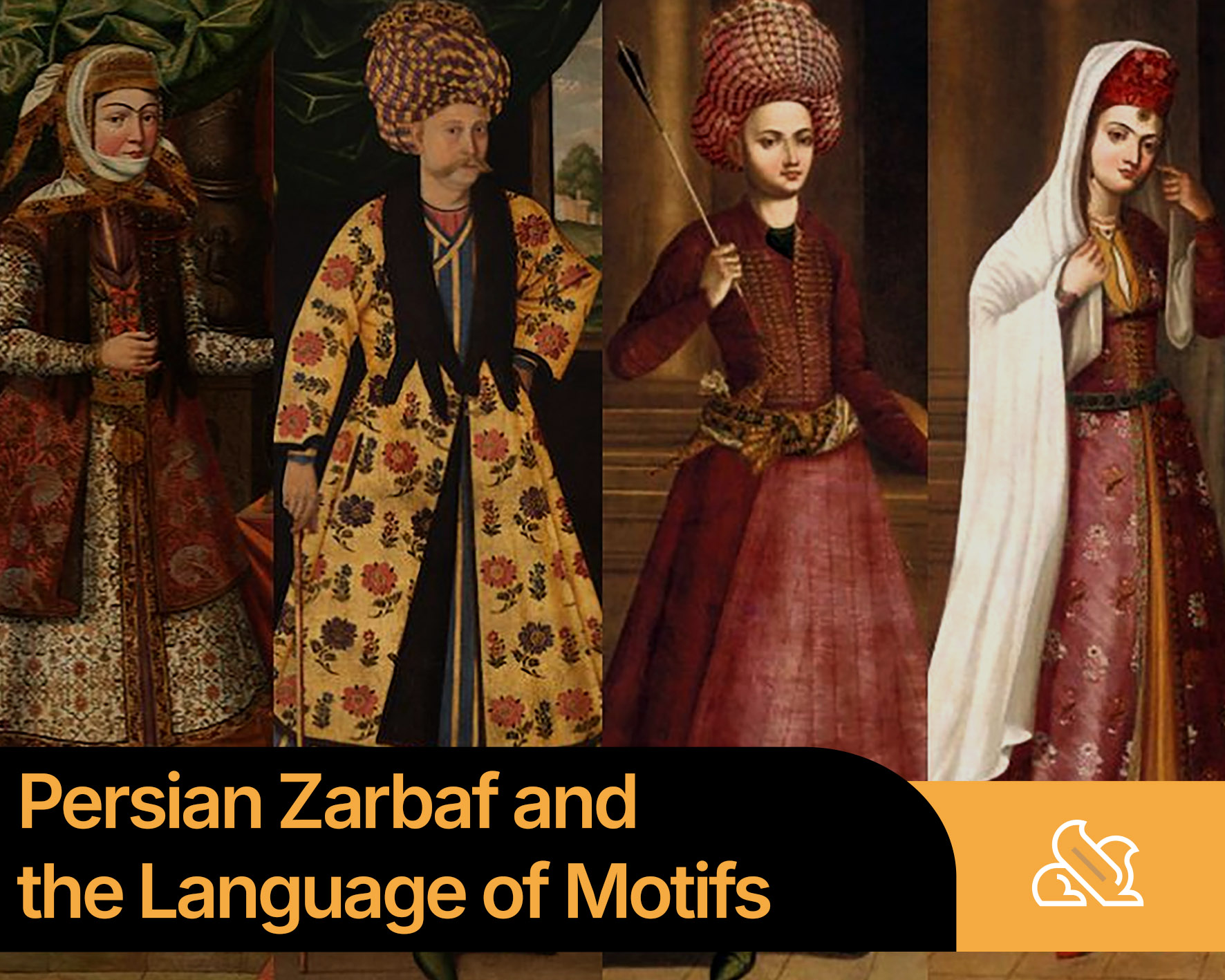
A Comparative Study of Iranian Brocade Motifs and Global Textile Traditions
Persian zarbaf, a symbol of art, culture, and the historical identity of Iran, is among the most exquisite examples of hand-woven textiles. These luxurious fabrics—crafted with silk threads or golabatun metal yarns in shimmering gold and silver—combine centuries-old craftsmanship with sophisticated symbolism and visual storytelling. Over time, zarbaf motifs have evolved, shaped by creativity, myth, and tradition, reflecting both the spiritual and aesthetic values of Iranian culture.
With the emergence of contemporary technologies—such as GANs (Generative Adversarial Networks)—a new chapter in brocade design has begun. This fusion of traditional craftsmanship and digital innovation now enables the creation of unique, modern motifs while preserving historical authenticity.
1. Origins: Achaemenid Brocade (550–330 BCE)
Historical evidence from metal artifacts and stone reliefs indicates that textile production and decorative weaving flourished during the Achaemenid era. Motifs from this period were distinguished by geometric, animal, and vegetal patterns.
Key Motifs
• Animal Figures:
Lions, deer, and eagles symbolized royalty, power, and divine protection.
• Geometric Designs:
Crossed lines and repeating structures formed the basis of later brocade compositions.
• Symbolism:
Each motif communicated social status, beliefs, or cosmological ideas.
The Achaemenid visual language later shaped the structural foundations of Iranian metal-thread textiles, eventually evolving into the zarbaf tradition.
2. Sasanian Period (224–651 CE)
The Sasanian era elevated Iranian textile art to new heights of sophistication. Motifs became more elaborate, rhythmic, and pronounced.
Key Motifs
• Vegetal Designs:
Spiraling vines, blossoms, and leaf forms arranged in symmetrical patterns.
• Mythical Creatures:
Winged horses, simurghs, and dragons infused fabrics with narrative power and royal symbolism.
• Weaving Innovations:
The introduction of metallic threads gave textiles a sculptural, lustrous quality.
Sasanian brocades were treasured in royal courts and religious ceremonies across Persia, China, and India, influencing centuries of global textile traditions.
3. Safavid Golden Age (1501–1736 CE)
The Safavid dynasty marks the peak of Persian brocade artistry. This period witnessed the flourishing of silk weaving, especially in Isfahan, Yazd, and Kashan. Fabrics adorned with gold and silver threads achieved unprecedented elegance.
Key Motifs
• Floral Motifs:
The Shah Abbasi flower, arabesques, and scrolling vines arranged in perfect symmetry.
• Human and Animal Scenes:
Courtly gatherings, hunting scenes, birds, and fantastical creatures.
• Color & Texture:
Richly dyed silks paired with shimmering metal yarns produced radiant, dimensional surfaces.
Safavid zarbaf textiles became symbols of luxury. They were exported widely to Europe, leaving a lasting impact on Western decorative arts and ecclesiastical fabrics.
4. Iranian Zarbaf Compared to European, Indian, and Chinese Brocades
A. European Motifs
European luxury textiles such as lampas and brocatelle often showcased intricate floral and geometric motifs. While they shared surface richness with Persian zarbaf, European textiles emphasized ornamentation rather than symbolic storytelling.
In church textiles—especially those found in the Vatican—motifs like crosses, angels, and sacred emblems dominated. Although both Persian and European brocades employed metallic threads, European design was spiritually Christian, whereas Iranian zarbaf remained grounded in nature, symmetry, mythology, and royal iconography.
B. Indian Motifs
Indian brocades such as jamawar and brocade featured floral and mythical animal motifs similar to Persian designs. However, Indian works employed brighter color palettes and less symmetrical, more fluid compositions. Use of gold and silver thread was common but often more ornamental than structural.
C. Chinese Motifs
Chinese brocades like Yunjin or silk brocade designs centered on dragons, clouds, and iconic blossoms. Unlike the geometric balance seen in Persian zarbaf, Chinese motifs emphasized fluidity and directional movement, often repeating horizontally across the textile.
5. Modern Innovation in Zarbaf Design
The integration of digital technologies has opened transformative possibilities for brocade craftsmanship.
Contemporary Approaches
• GAN-based motif generation:
AI models can reinterpret traditional motifs to produce innovative hybrid designs.
• Digital motif libraries:
Historic zarbaf patterns can be scanned and algorithmically recomposed, generating new visual languages without compromising authenticity.
• Blending tradition with modern weaving:
Digital patterning can be adapted into both handwoven and machine-woven zarbaf, creating textiles suited for contemporary luxury markets.
These tools enable designers to honor ancestral craftsmanship while expanding the creative possibilities of zarbaf for the future.
Conclusion
Persian zarbaf—rooted in the Achaemenid and Sasanian empires and reaching artistic brilliance in the Safavid era—is a masterful convergence of art, symbolism, and heritage. Its motifs reflect a unique visual philosophy shaped by geometry, rhythm, mythology, and an intimate conversation with nature.
A comparison with European, Indian, and Chinese brocades reveals that although all cultures contributed to the global identity of luxury textiles, Iranian zarbaf remains unparalleled in its structural harmony, symbolic depth, and aesthetic precision.
Today, with advances in digital design and AI, artists can reinterpret traditional motifs into contemporary creations—ensuring that this ancient craft continues to flourish while preserving its historic soul.
Daraniya, inspired by the ancient visual language of Iranian motifs, strives to modernize these timeless designs by thoughtfully blending them with selected Western patterns—creating innovative, distinctive, and contemporary motifs that resonate with today’s aesthetic sensibilities.


