Introduction
The abaya has long been one of the most recognizable garments in the Gulf region—flowing, elegant, and deeply rooted in cultural identity. Once a simple black cloak, it has evolved into a canvas of creativity for designers who combine tradition with modern luxury. Today, the luxury abaya is not only a symbol of modesty but also a statement of sophistication, individuality, and status.
In recent years, designers and couture houses across the Gulf have sought fabrics that reflect both exclusivity and heritage. Among these, Persian brocade (Zari weaving) has emerged as one of the most coveted materials. Handwoven with silk and gold-wrapped threads, brocade carries centuries of legacy and artistry.
At the heart of this revival stands Daraniya, a house dedicated to reintroducing Persian brocade to the global stage. With every line woven in silk and gold, Daraniya embodies a philosophy captured in its tagline: “Every line has a legacy.”
Abaya vs. Abā: A Note on Terminology
It is important to distinguish between the Persian ʿabā and the Gulf ʿabaya.
- In Iranian tradition, ʿabā usually refers to a men’s cloak, especially associated with clerics or worn in religious contexts. It is often brown, beige, or black and symbolizes modesty and authority.
- In the Arab Gulf, ʿabaya refers specifically to a women’s garment—a long, flowing cloak, traditionally black, but now reimagined as a platform for luxury fashion. Modern abayas often incorporate silk, lace, crystals, and increasingly, heritage fabrics like Persian brocade.
Thus, while the words share a common linguistic root, their cultural meanings have diverged. For the Gulf market, abaya represents a unique blend of tradition and high fashion—making it an ideal match for Daraniya’s handwoven brocade fabrics.
The Timeless Elegance of the Abaya in the Gulf
The abaya originated as a functional garment, providing coverage and comfort in the desert climate. Traditionally black and unembellished, it symbolized modesty and uniformity. But as Gulf economies expanded and luxury fashion became part of daily life, the abaya transformed into a platform for creativity and luxury expression.
Today, luxury abayas are embellished with crystals, lace, embroidery, and increasingly, heritage fabrics such as silk brocades. For many women in the Gulf, the abaya is no longer just a necessity—it is a fashion statement equal to haute couture gowns.
The abaya carries cultural prestige, often associated with royal courts, high society, and special occasions. For this reason, the choice of fabric is central: the material defines not just the look but also the message of power, refinement, and exclusivity.
Persian Brocade: A Fabric Woven with Gold and Legacy
Persian brocade—or Zari-baft—is a handwoven textile created from silk threads intertwined with gold or silver-wrapped yarns. Unlike printed or embroidered fabrics, brocade carries its design within its very weave, giving it a three-dimensional richness.
- Sassanid Era (224–651 CE): Brocade symbolized imperial power and was exported to Byzantium, India, and China.
- Safavid Dynasty (16th–17th century): Brocade reached artistic perfection, adorning the courts of Shah Abbas I.
- 20th Century: State workshops kept the tradition alive, but industrialization nearly erased it.
Founded by Dr. Nadia Tahvildari, Daraniya is among the few dedicated houses reviving this ancient craft. By working with master weavers and preserving traditional looms, Daraniya transforms Persian brocade into luxury fabrics designed for haute couture, interiors, and now, abayas.
Why Gulf Designers Choose Persian Brocade for Luxury Abayas
- Cultural harmony: Persian motifs resonate with Arab aesthetics, while shimmering gold threads reflect the region’s love for opulence.
- Colors of prestige: Daraniya’s palettes—black, gold, emerald, ruby, pearl—align with Gulf luxury tastes.
- Exclusivity: Handwoven fabrics take weeks to produce and exist in limited numbers, offering Gulf clients true uniqueness.
Daraniya | Every Line Has a Legacy
Daraniya’s mission is threefold:
- Preservation – safeguarding techniques and motifs that date back centuries.
- Innovation – adapting fabrics for contemporary fashion, including abayas.
- Global Reach – introducing Persian brocade to international markets, with the Gulf as a key destination.
By positioning itself as a luxury heritage brand, Daraniya ensures every abaya becomes not only beautiful but meaningful.
Sustainability and Exclusivity in the Gulf Fashion Market
Luxury in the Gulf is increasingly tied to sustainability and authenticity. Consumers value artisanal craftsmanship over mass production. Daraniya embodies slow fashion:
- Handwoven, not machine-made.
- Cultural heritage preserved.
- Limited production ensures exclusivity.
Applications: From Catwalk to Royal Wardrobes
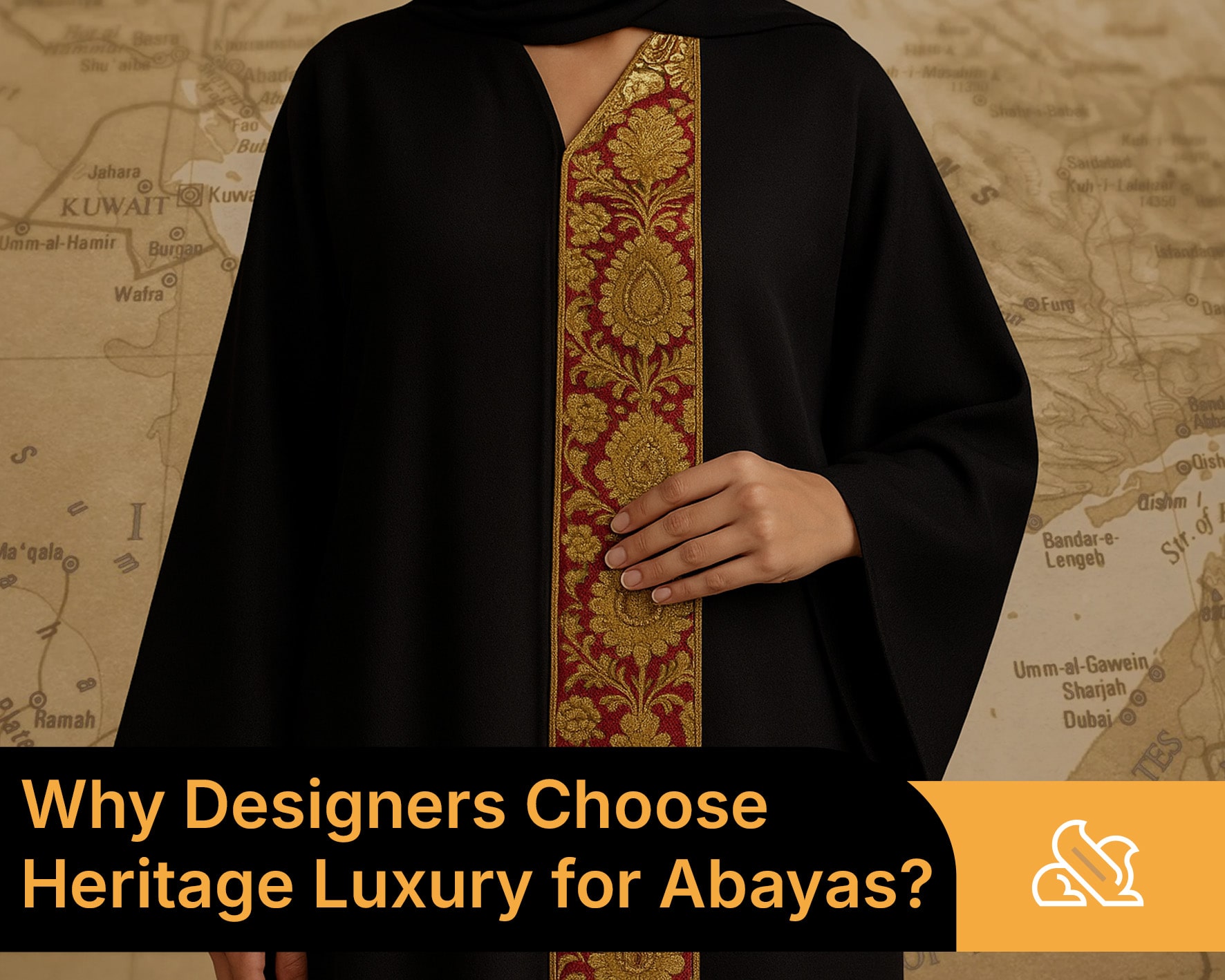
- Couture abayas: Black silhouettes lined with Shah Abbasi motifs in gold.
- VIP gifting: Abayas as exclusive gifts for royals and elites.
- Museums: Abayas with Persian brocade entering archives as cultural artifacts.
The Future of Abayas with Daraniya Brocade
Daraniya plans to:
- Collaborate with Gulf designers for bespoke abaya collections.
- Present at international fashion and textile fairs.
- Educate clients about the heritage behind each weave.
Daraniya is not just selling textiles—it is reshaping abayas into wearable works of art.
Conclusion
The abaya is a symbol of Gulf identity and pride. With Persian brocade, it becomes haute couture infused with heritage. Daraniya stands at the intersection of past and future, weaving silk, gold, and legacy into fabrics that define tomorrow’s luxury abayas.
Daraniya | Every line has a legacy.


