Introduction
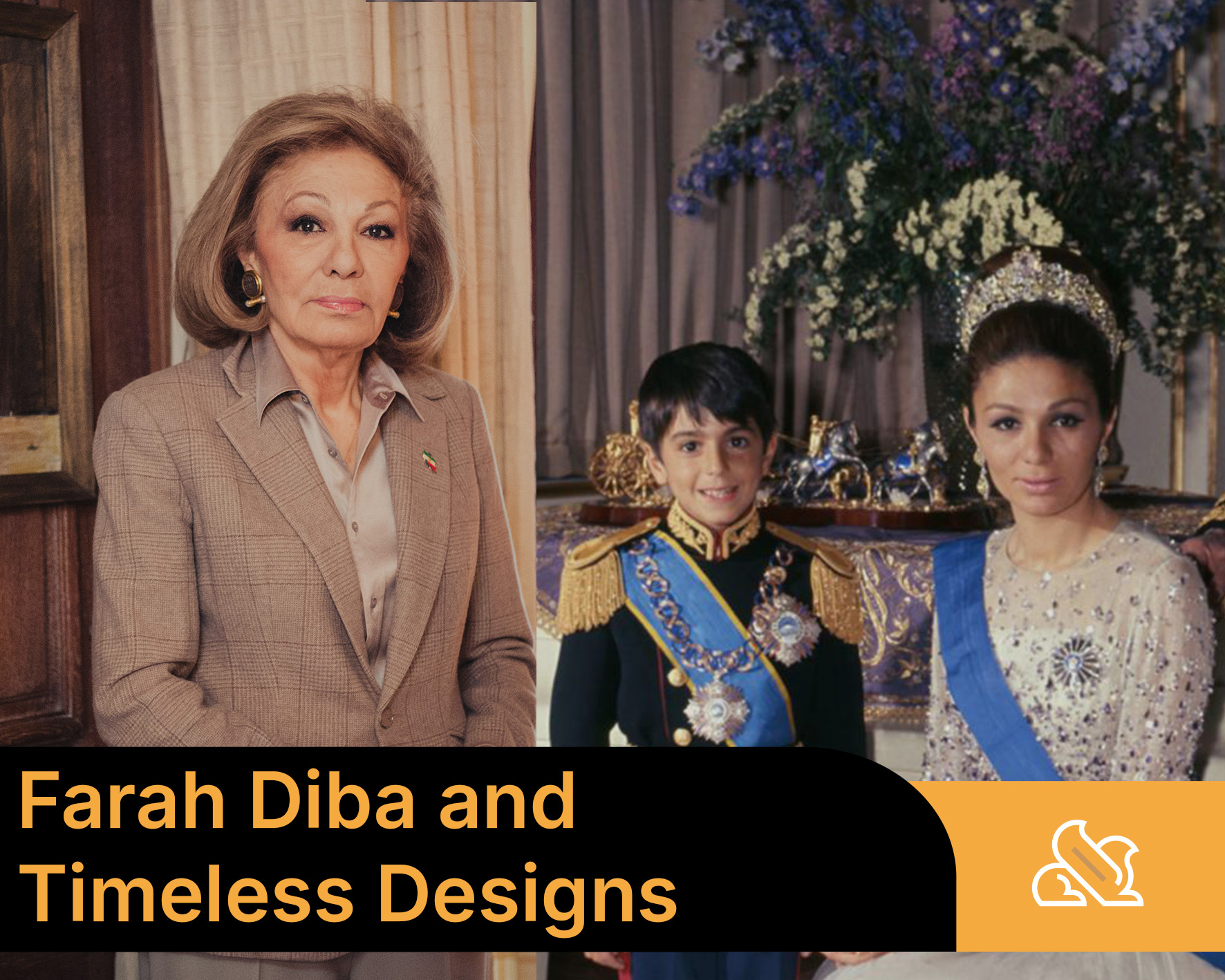
In the history of Iranian fashion, few figures embody the intersection of art, power, and beauty as profoundly as Farah Diba (Farah Pahlavi after marriage). She was not only the Queen of Iran but also a patron of designers, an icon of cultural diplomacy, and a muse who inspired the creation of gowns that blended national identity, traditional crafts, political symbolism, and modern aesthetics.
When we speak about “couture designed for Farah Diba,” it goes beyond tailoring—it reflects a cultural movement where attire became a canvas for Iranian identity, artistry, and global elegance.
This article explores her role in Iranian fashion, her signature gowns, the designers she worked with, and the cultural meanings woven into her wardrobe.
The Historical and Cultural Context
Early Life and Rise to Influence
Born in 1938 in Tehran, Farah Diba studied in Iran and later in France. In 1959, she married Mohammad Reza Pahlavi, Shah of Iran, becoming one of the most influential women of her era【source: Wikipedia】.
From the start of her queenship, she positioned herself as a patron of Iranian arts. She promoted museums, crafts, and especially fashion design, encouraging local creators to bring Iranian heritage to the global stage【source: Wikipedia】.
Beyond Royal Symbolism
As Shahbanu (Empress of Iran), Farah’s attire went far beyond ceremony. Each gown she wore carried a message: national pride, modern refinement, or cultural diplomacy. Designers integrated Persian motifs, embroidery, and traditional crafts to create ensembles that balanced Western couture with Iranian heritage.
Notable Iranian designers such as Mehr Monir Jahanbani incorporated traditional crafts like Balochi needlework into her gowns【source: Wikipedia】. Likewise, Keyvan Khosrovani created pieces for major occasions, including the 2,500-year Persian Empire celebrations, blending opulence with cultural symbolism【source: Her-storic Royal Dress】.
Designers Who Shaped Farah Diba’s Style
Mehr Monir Jahanbani
- Born in Tehran in 1926 into an aristocratic family.
- Known for her revival of Balochi embroidery, a vibrant and intricate craft from southeastern Iran【source: Wikipedia】.
- One of her iconic creations for Farah featured panels of colorful needlework said to be inspired by the hues of sunset.
- She was not only a designer but also a cultural mediator, supporting Balochi women artisans by integrating their work into haute couture commissions.
Keyvan Khosrovani
- Active in the Pahlavi era as one of Iran’s leading designers.
- Created ceremonial gowns for Farah, including designs for the 1971 Persepolis celebrations.
- His work drew on Persian motifs, architecture, and textiles, reimagined for international couture contexts【source: Her-storic Royal Dress】【source: ALANGOO】.
Collaborative Works
Some of Farah’s gowns were the result of collaboration between Jahanbani and Khosrovani, especially those featuring Balochi embroidery as decorative elements【source: Facebook】【source: ALANGOO】.
Other designers, including Bahar & Reza, later crafted gowns for Farah, blending motifs from Achaemenid reliefs, Persian floral patterns, and luxurious fabrics【source: baharreza.com】.
Key Features of Farah Diba’s Wardrobe
- Iranian Identity – Designers consistently integrated national symbols into her wardrobe: geometric Persian motifs, traditional embroideries, and elements inspired by Persian architecture.
- Blend of Tradition and Modernity – Her gowns had to stand alongside European couture but retain a distinctly Iranian character.
- Ceremonial Grandeur – Attire for state occasions carried heavy symbolic meaning, from color choices to embroidery, communicating messages of authority and refinement.
- Craftsmanship and Detail – Almost all of her gowns were bespoke, hand-embroidered, and made with fine fabrics, often combining imported silks with local artisan techniques.
Iconic Gowns and Their Symbolism
Wedding Dress (1959)
Her wedding gown was designed by Yves Saint Laurent during his tenure at Christian Dior【source: Wikipedia】. This set the tone for a life at the intersection of international couture and Iranian identity.
Coronation Gown (1967)
At her coronation as Shahbanu, Farah wore heavily embroidered gowns with golden fabrics and motifs inspired by Iranian heritage. These gowns became symbols of a new, modernized monarchy【source: Her-storic Royal Dress】.
Persepolis 2,500-Year Celebration (1971)
For one of the most opulent state ceremonies in modern history, Farah’s gowns combined luxurious textiles, shimmering embroidery, and designs inspired by Achaemenid motifs, aligning with the architectural grandeur of Persepolis【source: Her-storic Royal Dress】.
Gowns with Balochi Needlework
Several gowns incorporated strips or panels of Balochi embroidery, a striking fusion of tribal craft and royal couture. These ensembles highlighted Farah’s commitment to elevating regional crafts within national and international fashion【source: Wikipedia】.
Challenges in Designing for Farah
- Materials – Iran sometimes lacked domestic luxury fabrics, requiring imports.
- Balancing East and West – Designers had to ensure gowns were legible internationally but still distinctly Iranian.
- Skilled Labor – Intricate embroidery and gold-thread work required artisans with rare expertise.
- Symbolic Pressure – Each gown was scrutinized as a political and cultural statement, not merely fashion.
Cultural Significance for Today
Cultural Branding
Farah’s gowns proved that fashion can be a medium of national storytelling. Couture became a stage for expressing Iranian heritage in international arenas.
Architectural Fashion
Designers like Jahanbani demonstrated how local crafts could be revitalized through luxury commissions, giving new economic and cultural life to endangered traditions.
Lessons for Contemporary Luxury Brands
Brands like Daraniya can draw inspiration from this history. Just as Farah’s gowns fused heritage with modernity, today’s Iranian luxury brands can position themselves globally by weaving storytelling, authenticity, and artistry into their designs.
Conclusion
Farah Diba was not a decorative figure in Iranian fashion history; she was a turning point where identity, art, and power converged. Her gowns, designed by pioneers like Mehr Monir Jahanbani and Keyvan Khosrovani, embodied a blend of Iranian tradition and international couture.
For contemporary Iranian luxury, this legacy offers an enduring lesson: fashion is not just clothing — it is cultural diplomacy, heritage preservation, and timeless storytelling.


